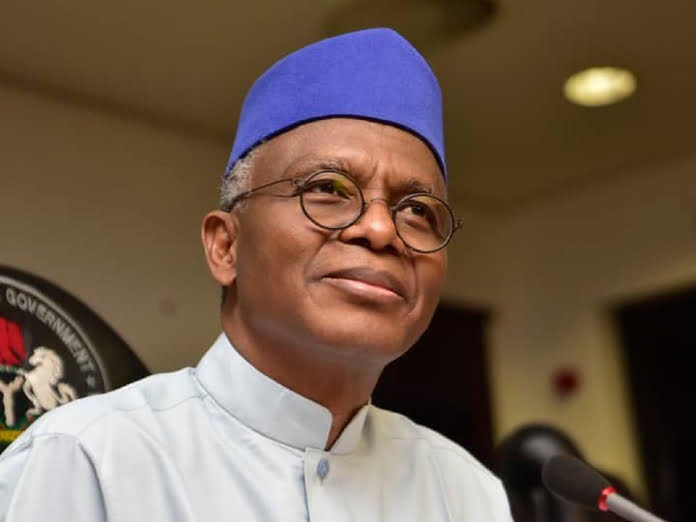
The Independent Corrupt Practices and Other Related Offences Commission (ICPC) has confirmed the rearrest of former Kaduna State Governor, Nasir El-Rufai, hours after he was released by the Economic and Financial Crimes Commission (EFCC) on Wednesday.
“Malam Nasiru El-Rufai is in the custody of the Commission in connection with ongoing investigations,” ICPC spokesperson John Odey wrote in a message shared on a journalist’s Whatsapp group Wednesday night.

Mr El-Rufai was detained by the EFCC on Monday over corruption allegations.
He was granted administrative bail at about 8 p.m. on Wednesday but was immediately taken into custody by armed operatives stationed at the EFCC headquarters in Abuja, according to witnesses.
Conflicting accounts initially emerged over the identity of the arresting agency. While some sources said operatives of the State Security Service (SSS) carried out the action, others pointed to the ICPC.
ICPC later confirmed it was responsible.
The development comes amid separate cybercrime charges filed against Mr El-Rufai by the SSS at the Federal High Court in Abuja.
The case, marked FHC/ABJ/CR/99/2026, followed remarks he made during a live interview on Arise Television on Friday, in which he alleged that the phone of Nigeria’s National Security Adviser, Nuhu Ribadu, was tapped.
Mr El-Rufai claimed he overheard Mr Ribadu directing security operatives to detain him, linking the alleged directive to an attempted arrest at the Nnamdi Azikiwe International Airport last Thursday after his return from Cairo, Egypt.
Security officials briefly confiscated his international passport during the airport encounter, witnesses said, before allowing him to leave the premises.
In response to the interview, SSS prosecutors charged Mr El-Rufai with unlawful interception of communications and related offences.
The prosecution alleged that he admitted intercepting the NSA’s communications, failed to report unlawful interceptions by others, and compromised public safety and national security.