Why Nigeria’s cohesion often rests on women’s unseen leadership
By Anietie Udobit

Nigeria’s story of unity is often told through institutions, negotiations, and high-level interventions. Yet beneath these visible structures lies a quieter architecture—one built patiently, daily, and often without applause. It is the work of women.
Across Nigeria’s diverse regions, women are frequently the first responders to division and the last custodians of peace. Long before conflict escalates into headlines, women are mediating disputes in homes, calming tensions in markets, sustaining dialogue in faith spaces, and holding communities together when trust is fragile. Their peacebuilding is rarely formal, but it is deeply effective.
Women build unity not only through authority, but through proximity—to families, to children, to grief, and to hope. In moments of crisis, they often operate where the state and institutions cannot easily reach: in intimate spaces where emotions run high and reconciliation must begin with listening rather than power.
In communities affected by violence, women have played central roles in healing trauma and restoring social bonds. They nurture recovery not just through programs, but through presence—rebuilding dignity, encouraging coexistence, and reminding communities of shared humanity beyond fear or difference. This work is slow, demanding, and emotionally taxing, yet it is foundational to lasting peace.
Women also shape unity through narrative. As journalists, educators, advocates, and cultural voices, they influence how Nigerians see one another. They challenge harmful stereotypes, insist on inclusive conversations, and expand the national imagination beyond “us versus them.” In a country where words can inflame or heal, this role is critical.
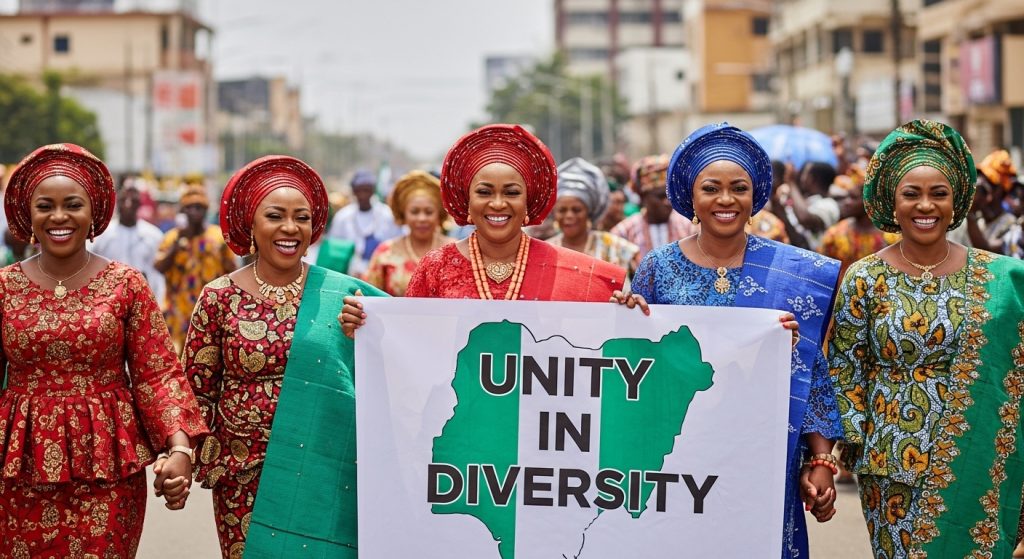
Importantly, women’s contribution to unity is not confined to women-only spaces. They operate across faiths, ethnicities, generations, and ideologies—often acting as bridges between divided groups. Their leadership style tends to prioritise dialogue over dominance, empathy over exclusion, and long-term cohesion over short-term victory.
Yet despite this central role, women’s peacebuilding work remains undervalued and under-recognised. It is frequently described as “supportive” rather than strategic, informal rather than essential. This misunderstanding risks weakening Nigeria’s unity efforts by overlooking one of its strongest assets.
As Nigeria marks Women’s History Month in March 2026 and the International Day of Women on March 8, the moment invites more than celebration—it calls for recognition and intentional inclusion. National conversations on unity, governance, and peace must move beyond token representation to meaningful participation. Women should not only be present in dialogue rooms; their perspectives should shape the agenda.
Unity is not sustained by declarations alone. It is sustained by relationships, care, patience, and courage—the very qualities women deploy daily across Nigeria. Recognising this does not diminish other contributions; it completes the picture.
If Nigeria is to deepen its unity, it must look not only to visible structures, but also to the quiet architects who have been holding the nation together all along.
Anietie Udobit writes “Our Shared Nation,” a reflective column on identity, belonging, and the stories that bind Nigerians across differences.