by Anietie Udobit
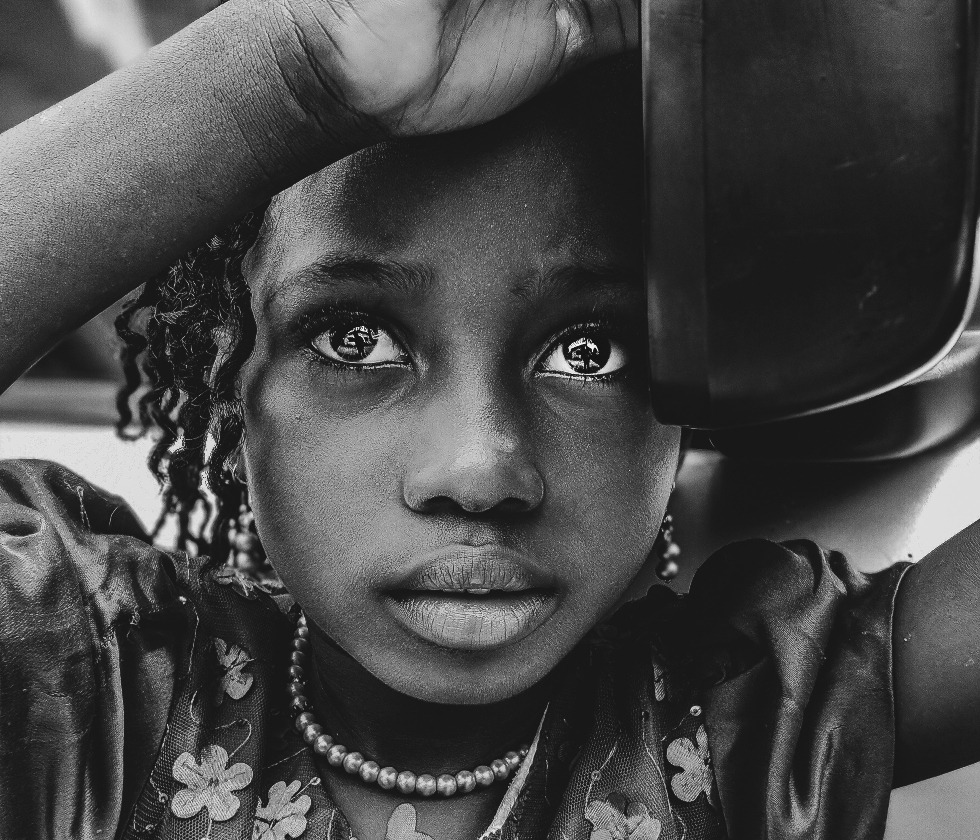
There is a child somewhere in Nigeria watching.
Grow your business with us

Not speaking.
Not arguing.
Just watching.
Watching how we talk about each other.
Watching how we disagree.
Watching how quickly we reduce human beings to tribe, religion, or region.
That child may not fully understand our politics or our history.
But they are learning something far more powerful — our behavior.
They are learning what it means to be Nigerian.
Not from textbooks or civic lessons,
but from us.
In many homes and communities, the lessons are subtle but lasting.
A young boy hears his father dismiss another tribe with casual contempt.
A teenage girl watches her community blame an entire religion for the actions of a few.
A child scrolls through social media and encounters a steady stream of anger, insults, and division — normalized, amplified, and rarely challenged.
And slowly, quietly, something begins to form in their minds:
This is how we treat each other.
These are not formal teachings.
They are not written into any curriculum.
Yet they shape attitudes more deeply than any classroom instruction ever could.
But there is another child, too.
A child who sees kindness across difference.
Who sees a Muslim neighbor stand in protection of a Christian family.
Who sees a Christian teacher mentor students regardless of background.
Who witnesses friendships that rise above tribe and religion.
That child learns something different:
This is how we can live together.
This is the quiet power of example — the kind that builds bridges without announcements, and shapes minds without force.
The truth is both simple and sobering:
We are raising the Nigeria that will replace us.
The children watching us today
will become the leaders correcting us tomorrow.
The question is not whether they will lead.
It is what exactly they will be correcting.
Will they inherit a nation deeply fractured —
where identity consistently outweighs integrity?
Or will they inherit a country still in progress —
imperfect, yet intentional about unity, fairness, and justice?
We often say, “the children are the future.”
But the future is not something we passively await.
It is something we actively model.
In our daily conversations.
In our public and private choices.
In what we tolerate — and what we challenge.
Every time we choose understanding over assumption,
we teach them.
Every time we reject divisive narratives,
we teach them.
Every time we stand for fairness — even when it is inconvenient —
we teach them.
The Nigeria we owe our children is not a perfect country.
Perfection is unrealistic.
But responsibility is not.
It is a country where:
- Difference is not treated as a threat
- Religion is not weaponized for division
- Tribe is not a barrier to opportunity
- Leadership is not an instrument of disunity
It is a country where being Nigerian
means something greater than geography or ancestry —
a shared commitment to dignity, fairness, and coexistence.
Sooner than we think, those children will grow.
They will sit in classrooms and lecture halls.
They will enter boardrooms and courtrooms.
They will occupy positions of authority in business, governance, and civil society.
And in those defining moments,
they will not draw from theory alone.
They will draw from memory.
From what they saw.
From what we showed them.
From what we tolerated.
From what we challenged.
And so, the question returns — persistent and unavoidable:
What example are we leaving behind?
A divided Nigeria?
Or a united future?
This is not merely a call for reflection.
It is a call to responsibility.
To build a nation where the next generation does not first need to unlearn hate
before they can lead with wisdom.
To create a society where unity is not an aspiration,
but a lived experience.
To give our children something better —
not just to inherit,
but to continue.
This is more than a conversation.
It is a commitment.
It is a responsibility.
It is Our Shared Nation.
Many Voices. One Future.
Anietie Udobit writes “Our Shared Nation,” a reflective column on identity, belonging, and the stories that bind Nigerians across differences.
About The Author