By Anietie Udobit
There are moments in the life of a nation that feel symbolic — almost divinely arranged.

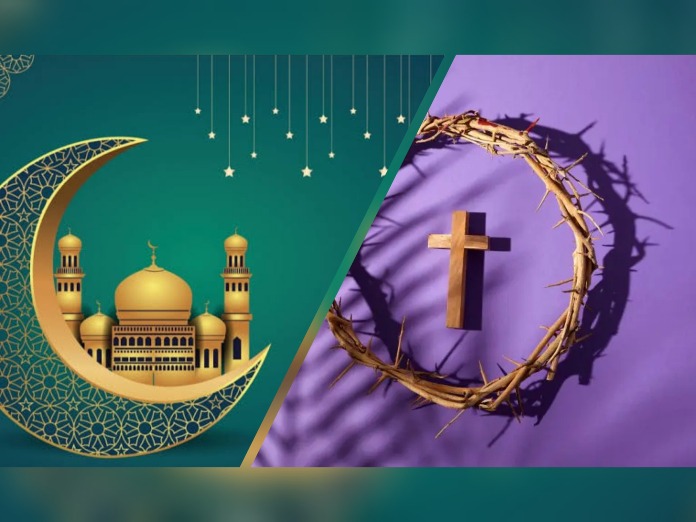
This year, as Muslims begin the sacred month of Ramadan and Christians enter the solemn season of Lent on the same day, Nigeria is offered more than a calendar coincidence. We are offered a mirror.
Two faith traditions.
Two spiritual journeys.
One nation.
In a country often described through the lens of religious difference, this convergence speaks quietly but powerfully: our deepest values are not as divided as our headlines sometimes suggest.
Ramadan calls Muslims to fasting, prayer, charity, discipline, and renewed devotion. Lent invites Christians into reflection, repentance, sacrifice, and spiritual renewal.
Different doctrines.
Different rituals.
But remarkably similar intentions.
Both seasons teach self-restraint in a culture of excess.
Both elevate compassion in a world of indifference.
Both prioritize charity in a time of hardship.
Both remind believers that character matters more than comfort.
If millions of Nigerians — across mosques and churches — are simultaneously practicing patience, generosity, and humility, what might that mean for our national life?
Nigeria’s diversity has long been both her beauty and her burden. Religion, like ethnicity, has sometimes been manipulated to deepen suspicion rather than strengthen solidarity.
But this shared season disrupts that narrative.
It reminds us that unity is not uniformity. Unity does not demand sameness. It requires shared commitment to higher values — justice, compassion, discipline, mercy, truth.
When a Muslim neighbour wakes before dawn for suhoor and a Christian neighbour rises for early Lenten prayers, they are both choosing devotion over distraction. When one breaks fast at sunset and another abstains in quiet sacrifice, both are engaging in spiritual discipline.
The forms differ. The purpose aligns.
As Nigeria journeys toward another critical political season, this overlap carries profound implications. It challenges leaders to tone down divisive rhetoric. It challenges citizens to reject fear-driven narratives. It challenges institutions and media platforms to elevate stories of cooperation rather than conflict.
Imagine if the discipline of Ramadan and the introspection of Lent shaped our politics.
Imagine if the charity of zakat and the generosity encouraged during Lent influenced public life.
Imagine if repentance and renewal were applied not only to individuals but to systems.
This is not idealism. It is possibility.
In homes across Nigeria, families will gather to break fast. In churches and mosques, prayers will rise daily. In markets and offices, believers will carry their disciplines into public space.
Perhaps the real message of this sacred convergence is this:
Our faith traditions are strongest not when they compete, but when they inspire us to become better citizens.
The question is not whether Nigeria is diverse. That is a given.
The question is whether we can translate diversity into solidarity.
When Ramadan and Lent begin together, the nation is gently reminded: our moral foundations are not as far apart as we think.
If we can fast together in discipline,
reflect together in humility,
and give together in compassion,
Then surely we can build together in unity.
This is more than a coincidence of dates.
It is a call to conscience.
And perhaps, just perhaps, it is a sign that amidst our differences, Nigeria still shares a common soul.
Anietie Udobit writes “Our Shared Nation,” a reflective column on identity, belonging, and the stories that bind Nigerians across differences.